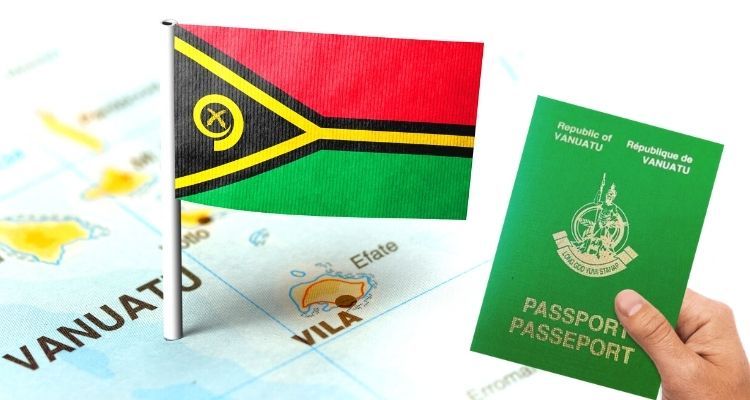

Choosing between Vanuatu and Caribbean citizenship by investment programs represents one of the most significant decisions for global investors seeking second citizenship. Both regions offer compelling advantages, from visa-free travel to tax benefits, yet they differ substantially in processing times, costs, and strategic positioning. This comprehensive comparison examines the key factors that distinguish these popular citizenship options to help you determine which aligns best with your personal and financial objectives.
Investment Requirements and Financial Considerations
The financial commitment required for citizenship varies significantly between Vanuatu and Caribbean nations. Vanuatu's Development Support Program (DSP) starts at approximately $130,000 for a single applicant, positioning it as one of the most accessible options in the citizenship by investment landscape. This contribution goes directly to the government's development fund and does not require ongoing property maintenance or management fees.
Caribbean citizenship programs present a broader range of investment structures. Dominica offers the most affordable Caribbean option at around $100,000 for a single applicant through its Economic Diversification Fund, while St. Kitts and Nevis, Antigua and Barbuda, Grenada, and St. Lucia require contributions ranging from $100,000 to $150,000 depending on family size and specific program requirements. Many Caribbean nations also offer real estate investment routes, typically requiring minimum investments of $200,000 to $400,000 in approved projects.
Beyond the base investment, applicants must consider additional costs including due diligence fees, processing charges, legal fees, and passport issuance costs. Vanuatu's total fees for a single applicant typically reach $150,000 to $160,000, while Caribbean programs can range from $120,000 to $180,000 when all expenses are factored in. Real estate options in the Caribbean involve additional considerations such as property holding periods (usually five to seven years), maintenance fees, and potential resale challenges.
Processing Speed and Application Efficiency
Time to citizenship represents one of Vanuatu's most distinctive advantages. The Vanuatu DSP consistently delivers citizenship within 30 to 60 days from application submission, making it the fastest citizenship by investment program globally. This accelerated timeline appeals particularly to applicants with urgent travel needs, business opportunities requiring immediate mobility, or those seeking rapid diversification of their citizenship portfolio.
Caribbean programs generally require longer processing periods, though they remain relatively efficient compared to traditional immigration pathways. Processing times vary by jurisdiction:
- Dominica — typically 3 to 4 months from submission to citizenship approval
- St. Kitts and Nevis — approximately 4 to 6 months for standard processing, with accelerated options available
- Antigua and Barbuda — generally 3 to 4 months for straightforward applications
- Grenada — usually 4 to 6 months depending on due diligence complexity
- St. Lucia — typically 3 to 4 months for most applicants
The application process itself differs in complexity. Vanuatu requires minimal physical presence — no interview, no residency requirement, and no need to visit the country before or after obtaining citizenship. Caribbean programs similarly impose no residency requirements, though some jurisdictions like Antigua and Barbuda require a brief visit within the first five years of citizenship. Documentation requirements remain comparable across both regions, with standard background checks, financial verification, and health assessments forming the core of due diligence procedures.
Travel Freedom and Visa-Free Access Comparison
Visa-free travel access serves as a primary motivator for citizenship by investment, and this category reveals nuanced differences between Vanuatu and Caribbean passports. Vanuatu passport holders enjoy visa-free or visa-on-arrival access to approximately 130 countries and territories, including key destinations throughout Europe's Schengen Area, the United Kingdom, Russia, Singapore, and Hong Kong. This access facilitates business travel, tourism, and international mobility across major economic regions.
Caribbean passports generally offer broader travel privileges, though the extent varies by specific nation. The strongest Caribbean passports provide access to 140 to 150+ destinations, with notable advantages including:
- Grenada — unique among Caribbean nations in offering visa-free access to China, plus eligibility for the US E-2 investor visa treaty
- St. Kitts and Nevis — extensive European access and strong recognition as the oldest citizenship by investment program
- Antigua and Barbuda — comprehensive travel freedom including Schengen Area and UK access
- Dominica — solid global mobility despite being among the most affordable options
- St. Lucia — comparable access to other Caribbean nations with recent program enhancements
The practical significance of these differences depends heavily on individual travel patterns. For investors primarily focused on European business travel, Asian markets, and Commonwealth countries, both Vanuatu and Caribbean passports perform admirably. However, those requiring frequent access to China or seeking US E-2 treaty benefits will find Grenada's unique advantages compelling. It's worth noting that visa-free access agreements evolve over time, and both Vanuatu and Caribbean nations actively work to expand their diplomatic relationships and travel privileges.
Regional Positioning and Strategic Value
Geographic location influences the strategic value of citizenship beyond mere travel access. Vanuatu's position in the South Pacific offers proximity to Australia, New Zealand, and emerging Asian markets. This positioning appeals to investors with business interests in the Asia-Pacific region or those seeking a geographically diversified citizenship portfolio. The country's political stability, English-speaking environment, and Commonwealth membership add to its strategic appeal.
Caribbean nations benefit from their proximity to North and South America, offering convenient access to major Western Hemisphere markets. The region's established financial services infrastructure, mature tourism industries, and historical ties to both European and American economies create different strategic opportunities. For investors with significant business interests in the Americas or those seeking eventual pathways to US market access (particularly through Grenada's E-2 treaty), Caribbean citizenship may offer superior positioning.
Tax Implications and Financial Privacy
Taxation represents a critical consideration that often influences citizenship decisions as significantly as travel freedom. Vanuatu operates as a territorial tax jurisdiction with no personal income tax, capital gains tax, inheritance tax, or wealth tax for residents or citizens. This tax structure creates substantial advantages for high-net-worth individuals seeking to optimize their global tax position, though applicants must carefully consider their tax residency status and obligations in their current country of residence.
Caribbean nations similarly offer favorable tax environments, though specific structures vary by jurisdiction. Most Caribbean citizenship by investment countries impose no taxes on worldwide income for non-residents, creating comparable benefits to Vanuatu for investors who maintain tax residency elsewhere. Key considerations include:
- No capital gains taxes — most Caribbean nations do not tax capital gains, protecting investment returns
- No inheritance or estate taxes — wealth transfer occurs without tax burden in most jurisdictions
- Territorial taxation — income earned outside the country typically remains untaxed for non-residents
- Tax treaty networks — some Caribbean nations maintain double taxation treaties that may benefit certain investors
Financial privacy standards have evolved significantly in recent years as international transparency initiatives have expanded. Both Vanuatu and Caribbean nations have implemented Common Reporting Standard (CRS) protocols and enhanced due diligence measures to comply with international financial standards. While these jurisdictions no longer offer the banking secrecy of previous decades, they maintain professional financial services sectors with robust privacy protections within the bounds of international compliance requirements.
The choice between Vanuatu and Caribbean citizenship ultimately depends less on which program is objectively "better" and more on which aligns most closely with your specific travel patterns, business interests, tax situation, and long-term strategic objectives.
Due Diligence Standards and Program Reputation
The credibility and international acceptance of citizenship by investment programs depend heavily on rigorous due diligence standards. Both Vanuatu and Caribbean nations have invested substantially in enhancing their screening procedures following international pressure to prevent misuse of economic citizenship programs. These enhanced standards protect program integrity while ensuring that passports maintain their value and acceptance globally.
Caribbean programs, particularly St. Kitts and Nevis as the longest-running program established in 1984, have developed sophisticated due diligence frameworks over decades of operation. These jurisdictions employ multiple international background check agencies, conduct thorough financial source of funds verification, and maintain comprehensive databases of rejected applicants. The Caribbean's mature regulatory environment and established track record contribute to strong international recognition of their passports.
Vanuatu has significantly strengthened its due diligence procedures in recent years, implementing enhanced background checks and stricter application requirements following concerns raised by international partners. The program now employs reputable international due diligence firms and has established clearer regulatory frameworks. While newer than Caribbean programs, Vanuatu's commitment to maintaining program integrity has resulted in improved international perception and sustained visa-free access to key destinations.
Family Inclusion and Generational Benefits
Both Vanuatu and Caribbean programs allow family inclusion, though specific provisions and costs vary. Vanuatu permits inclusion of a spouse, dependent children, and dependent parents in a single application, with additional fees for each family member. The total investment for a family of four typically ranges from $180,000 to $220,000 depending on children's ages and specific circumstances.
Caribbean programs offer similar family inclusion options with varying fee structures. Most jurisdictions allow spouses, dependent children under 30 (in some cases), dependent parents over 55 or 65, and dependent siblings in certain circumstances. Family pricing structures differ significantly between nations, making careful comparison essential for families seeking citizenship together. Some Caribbean programs offer particularly favorable pricing for larger families, while others charge substantial per-person fees that can make family citizenship considerably more expensive.
Citizenship typically passes to future generations in both regions, creating lasting value beyond the initial investment. Children born to Vanuatu or Caribbean citizens generally acquire citizenship by descent, establishing multi-generational benefits. This inheritance feature transforms citizenship by investment from a personal benefit into a family legacy that provides travel freedom, residence options, and strategic flexibility for descendants.
Making Your Decision: Key Factors to Consider
Selecting between Vanuatu and Caribbean citizenship requires careful evaluation of your specific circumstances, priorities, and long-term objectives. Neither option is universally superior — each offers distinct advantages that may align differently with individual needs. Consider these essential factors when making your decision:
- Timeline urgency — if you need citizenship within weeks rather than months, Vanuatu's unmatched processing speed provides a decisive advantage that no Caribbean program can match.
- Travel destinations — analyze your actual travel patterns and business needs; if China access or US E-2 visa eligibility matters significantly, Grenada offers unique benefits, while for most other destinations, both options perform comparably.
- Budget constraints — total costs vary, with Dominica offering the lowest entry point and Vanuatu providing competitive pricing with faster processing; calculate all fees including due diligence, legal costs, and ongoing expenses.
- Geographic preferences — consider whether Asia-Pacific or Western Hemisphere positioning better serves your business interests, residence preferences, and strategic objectives.
- Program maturity — Caribbean programs offer longer track records and established international recognition, while Vanuatu provides a newer but increasingly respected alternative with unique speed advantages.
- Family composition — compare family inclusion costs carefully, as pricing structures differ substantially and may significantly impact total investment requirements.
- Tax optimization — both regions offer favorable tax environments, but specific structures and treaty networks may create advantages depending on your current tax residency and financial situation.
Many sophisticated investors ultimately pursue citizenship in both regions, recognizing that Vanuatu and Caribbean passports serve complementary rather than competing purposes. A Vanuatu passport can provide rapid citizenship and Asia-Pacific positioning, while a Caribbean passport offers broader travel access and Western Hemisphere advantages. This dual-citizenship strategy maximizes flexibility and creates redundancy that protects against potential future changes in any single program or jurisdiction.
The citizenship by investment landscape continues evolving as nations refine their programs, adjust requirements, and respond to international pressure for enhanced due diligence. Staying informed about program changes, visa-free access updates, and regulatory developments remains essential for making optimal decisions. Working with experienced advisors who maintain current knowledge of both Vanuatu and Caribbean programs ensures you receive accurate information and strategic guidance tailored to your unique situation.
Whether you choose Vanuatu for its exceptional speed and Asia-Pacific positioning, select a Caribbean nation for its established reputation and comprehensive travel access, or pursue both for maximum strategic flexibility, citizenship by investment offers powerful tools for global mobility, tax optimization, and personal freedom. Our team specializes in guiding clients through both Vanuatu and Caribbean citizenship programs, providing objective comparisons, handling complex applications, and ensuring successful outcomes. Contact us today to discuss your specific circumstances and discover which citizenship by investment option — or combination of options — best serves your goals and creates lasting value for you and your family.